The Risks of Metal Heating Oil Tanks — and Why Location Matters
Metal domestic heating oil tanks may still be common, but they come with increasing risks. Ageing metal, exposure to weather, and internal corrosion mean these tanks can deteriorate silently, often leaking before homeowners realise anything is wrong. Compared with modern plastic or bunded tanks, they typically have a shorter lifespan and are more vulnerable to damage.
One of the biggest factors affecting their safety is where they’re located. Tanks placed too close to buildings trap moisture and speed up corrosion. Those sitting directly on soil are exposed to constant damp, while tanks in open, unsheltered areas face accelerated rusting from rain and temperature changes. Proximity to drains, ditches, or watercourses dramatically increases the consequences of a leak, and overgrown or inaccessible locations make inspections difficult.
When a metal tank fails, the results can be severe: contaminated soil, costly clean-up work, disruption to heating, and in some cases, issues with insurance or environmental authorities.
Homeowners should regularly check the tank’s surroundings, ensure good airflow and a stable base, keep vegetation under control, and consider upgrading to a modern, bunded alternative. A well-sited tank is far less likely to fail—and far easier to maintain safely.
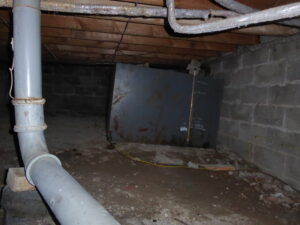
This old metal tank was found in the crawl space beneath a bedroom of a bungalow!